
An astronomer’s answer
Can you name a star? Honestly, no.
No company can give a star an official name, including us. The International Astronomical Union, whose names astronomers use, says purchased names have “no formal or official validity whatsoever.” What you can give is a real star that already has a name, that you can see with your own eyes, and whose light left it the year they were born.
By Mayukh Bagchi, founder & phd candidate in astronomy · sources linked below
The short version
Three facts before you buy anything
Star names come from the IAU
Its Working Group on Star Names approves proper names. Names sold by companies have no official standing, and the IAU dissociates itself from the practice.
No government records them
The US Library of Congress says it has no connection with any star registry. A registry’s list is its own private record.
Real stars already have names
Sirius, Vega, Arcturus, Capella, Aldebaran: the bright stars you can see were named long ago. Giving one of them, for a true reason, is a gift no one can contradict.
The honest alternative
Find the real star that belongs to them
Light crosses one light-year in one year. So when someone turns 37, the light reaching them tonight from Arcturus, 37 light-years away, left that star the year they were born. Enter their birth date and we find their star: its official name, its catalogue number, where it is, and the sky over their birthplace that night. Free to look up.
To keep it: the Birthday Star Certificate, a printable PDF ($7.99) · their birth sky as a digital print ($19.99) · framed from $79.99 with free shipping. None of it renames the star.
Side by side
What a star registry sells, and what we give instead
A registry sells a certificate and an entry in its own book. That can be a sweet gesture, as long as everyone knows what it is. Here is the difference in plain terms.
- Is the name official?
- Star registry · No. The IAU does not recognise purchased names.
- Their birthday star · The star keeps its official IAU name. We don’t rename it.
- Will astronomers or star apps use it?
- Star registry · No.
- Their birthday star · Yes: it is the name every star app shows.
- Can you see it?
- Star registry · It depends. Ask for its magnitude: above 6 needs binoculars or a telescope.
- Their birthday star · Yes. All 83 stars we use are brighter than magnitude 5.
- Catalogue number
- Star registry · Varies by company. Ask for it.
- Their birthday star · Its Hipparcos number, which you can look up anywhere.
- Is it exclusive?
- Star registry · No. Another company can sell a different name for the same star.
- Their birthday star · No. Everyone born around the same year shares it, and we say so.
- Why that star?
- Star registry · Chosen by the seller.
- Their birthday star · Its light left it the year they were born.
Before you buy from any star company, ask three things
- · What is the star’s magnitude? Above 6, nobody sees it without optics.
- · What is its catalogue number (HIP, HD or TYC)? Check it in a free app such as Stellarium.
- · Who else will use this name? If the answer is “only us”, you are buying a keepsake, not a name.
How it really works
How a star gets a name
Almost every star is known by a number. The Hipparcos satellite measured 118,218 stars, and each carries a HIP number; the Gaia mission’s catalogue lists almost two billion. Proper names are rare. The bright ones mostly come down from Arabic, Greek and Latin astronomy, and since 2016 the IAU’s Working Group on Star Names has kept the official list, starting with 227 names and adding more from cultures around the world.
The public has helped name stars, just not by paying. In the IAU’s NameExoWorlds contests of 2015, 2019 and 2022, people around the world proposed and voted on names for stars that host planets, and those names are now official. If you ever see a call for entries, that is the only real way to name a star.
That is why we don’t sell names. What we can do with real precision is tell you which star belongs to someone’s story. A birthday star is one: the named star at the same distance in light-years as their age. The sky over a place on a date is another: every naked-eye star, where it actually stood, computed from the same catalogue astronomers use. The nearest birthday stars are Sirius (8.6 ly), Vega (25 ly), Arcturus (37 ly); the finder covers 83 named stars out to about 127 light-years.
When it matters most
For someone you lost, or someone just arrived
In memory of someone
People often look for a star to name after someone who has died. We would rather give you something true: their birthday star, a real light in the sky you can go outside and find, or the sky exactly as it stood on a night that was theirs. Put their name and your words beneath it.
For a new baby
A baby’s first sky is the one over their birthplace the night they were born. It is theirs alone in a way no registry name can be, and you can add their name, weight and time of birth to it.
To keep on the wall
Their star, ringed on their own sky
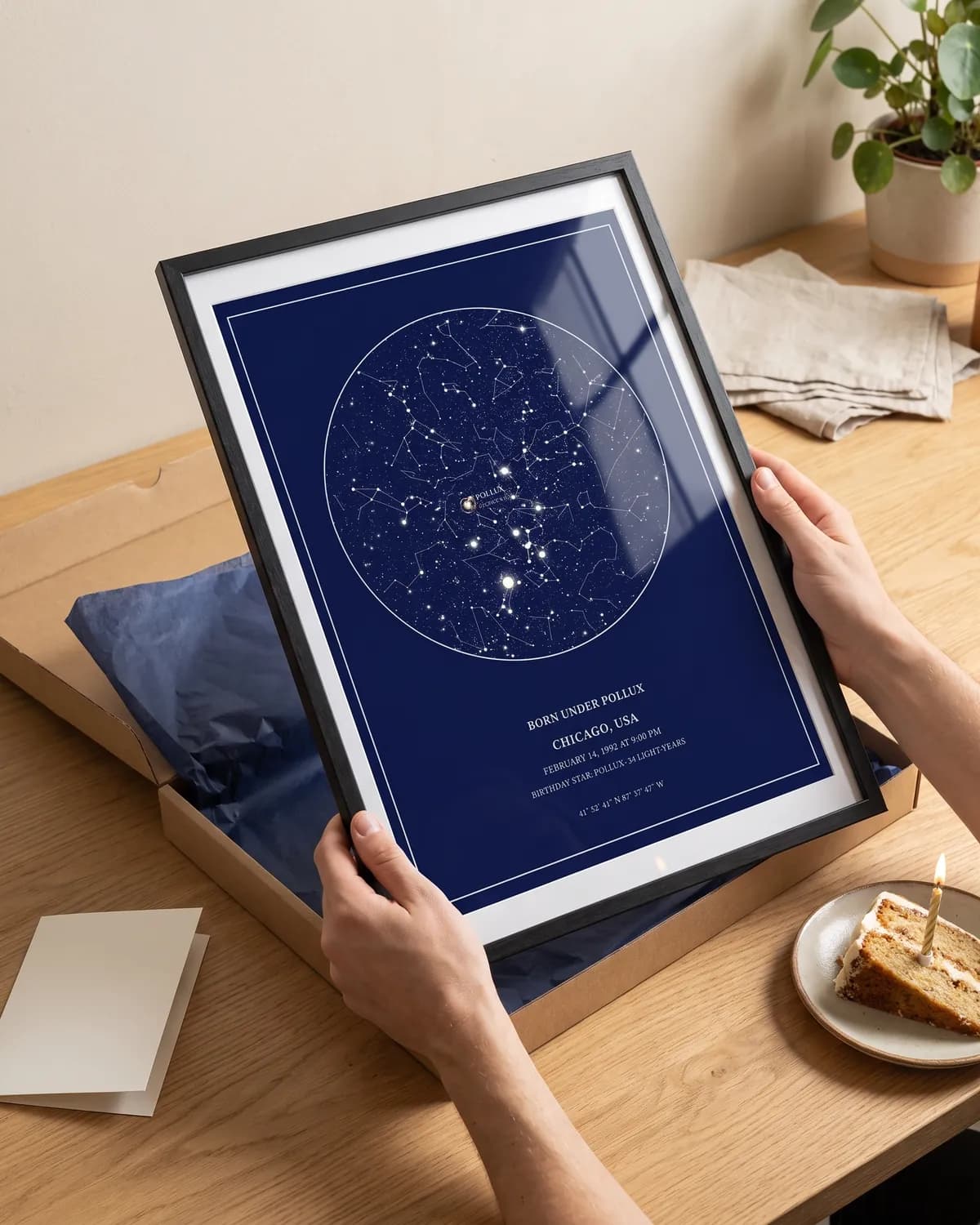
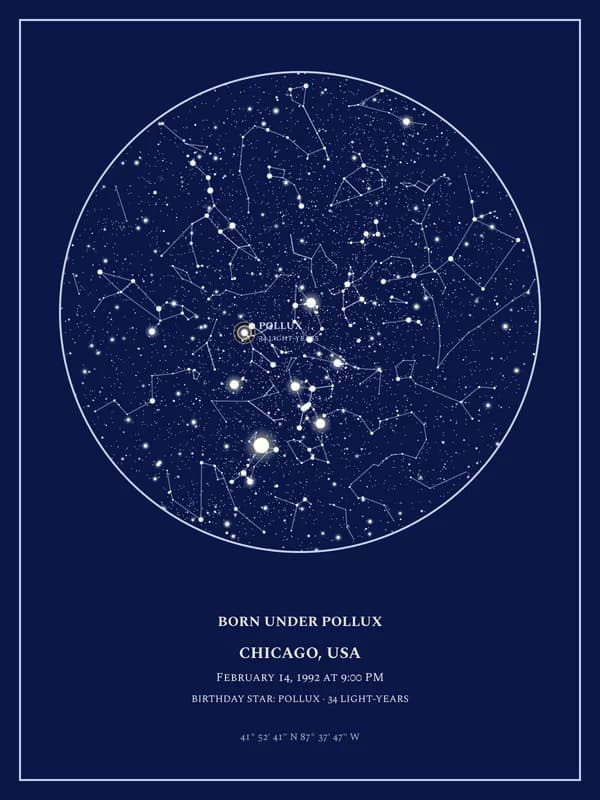
Any custom star map can ring the birthday star in gold and print its real name under the date: Birthday star: Pollux · 34 light-years. Digital $19.99, framed from $79.99, free shipping.
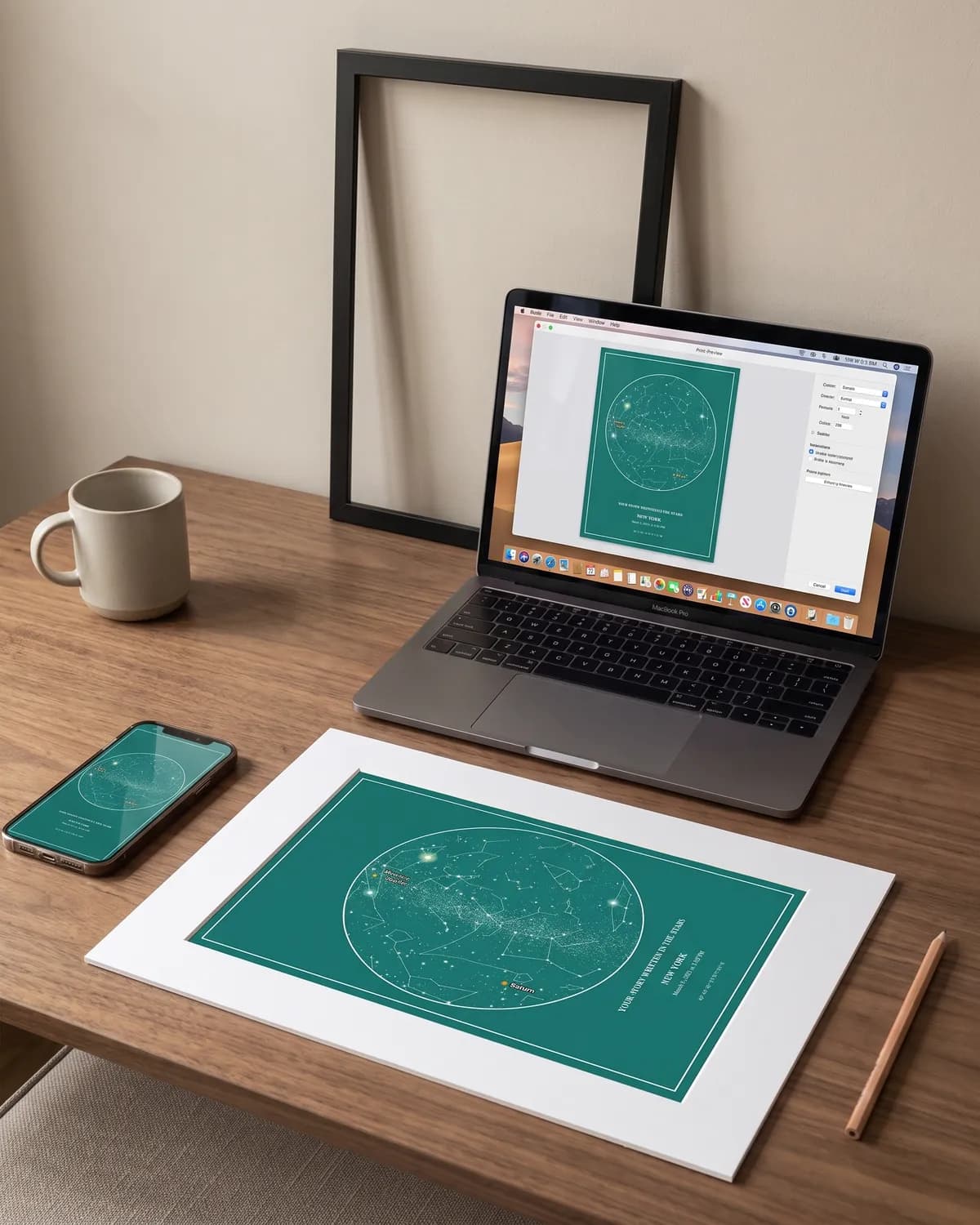
PLATE 01·PNG + PDF · 300 DPI · MINUTES
Digital Star Chart
In your inbox the moment you order. Print it, frame it, or gift the file.
$19.99$24.99Save 20%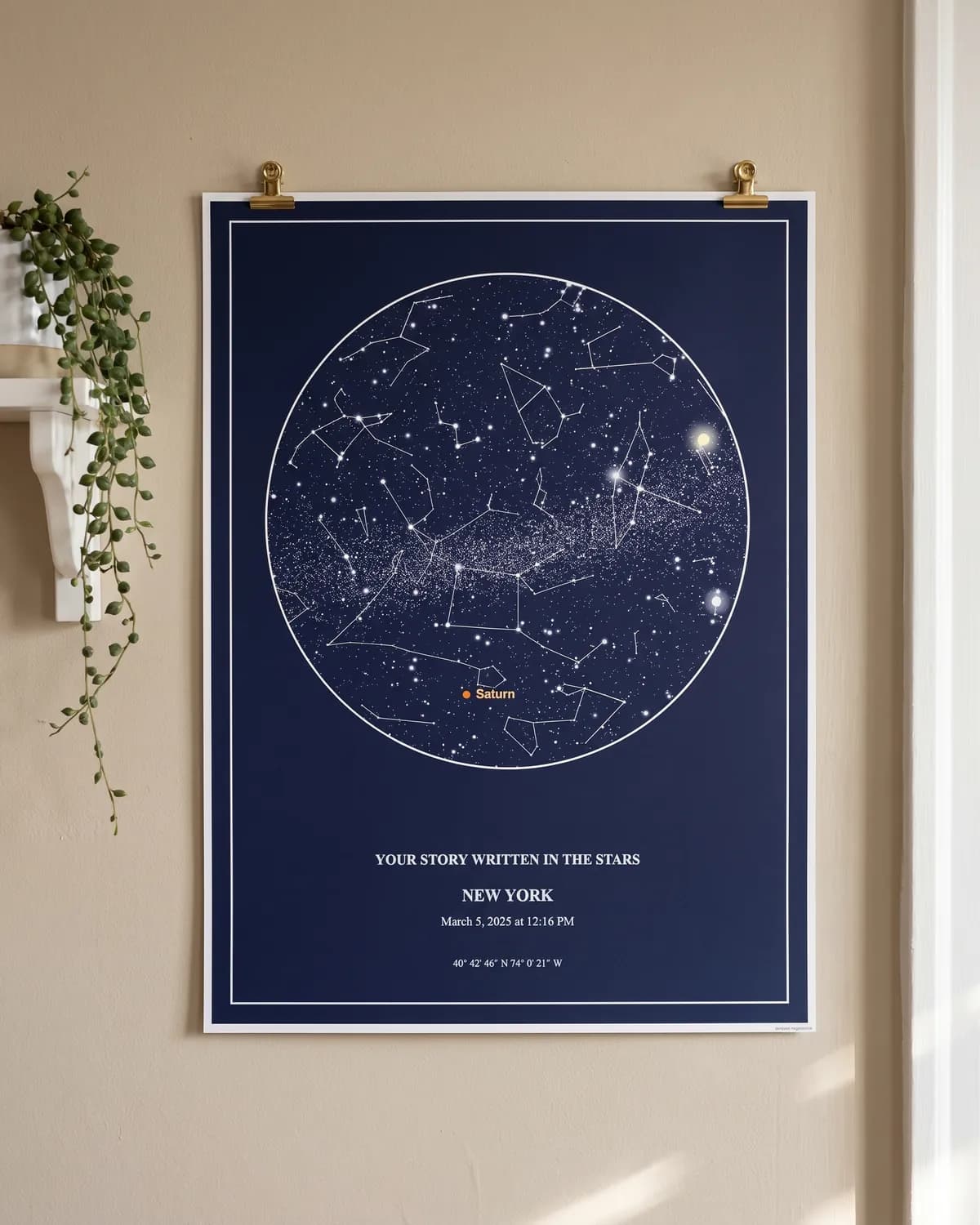
PLATE 02·ARCHIVAL MATTE · 11×14 TO 24×36 IN
Unframed Poster
Museum-grade paper, shipped rolled in a rigid tube. Free shipping.
$39.99$49.99Save 20%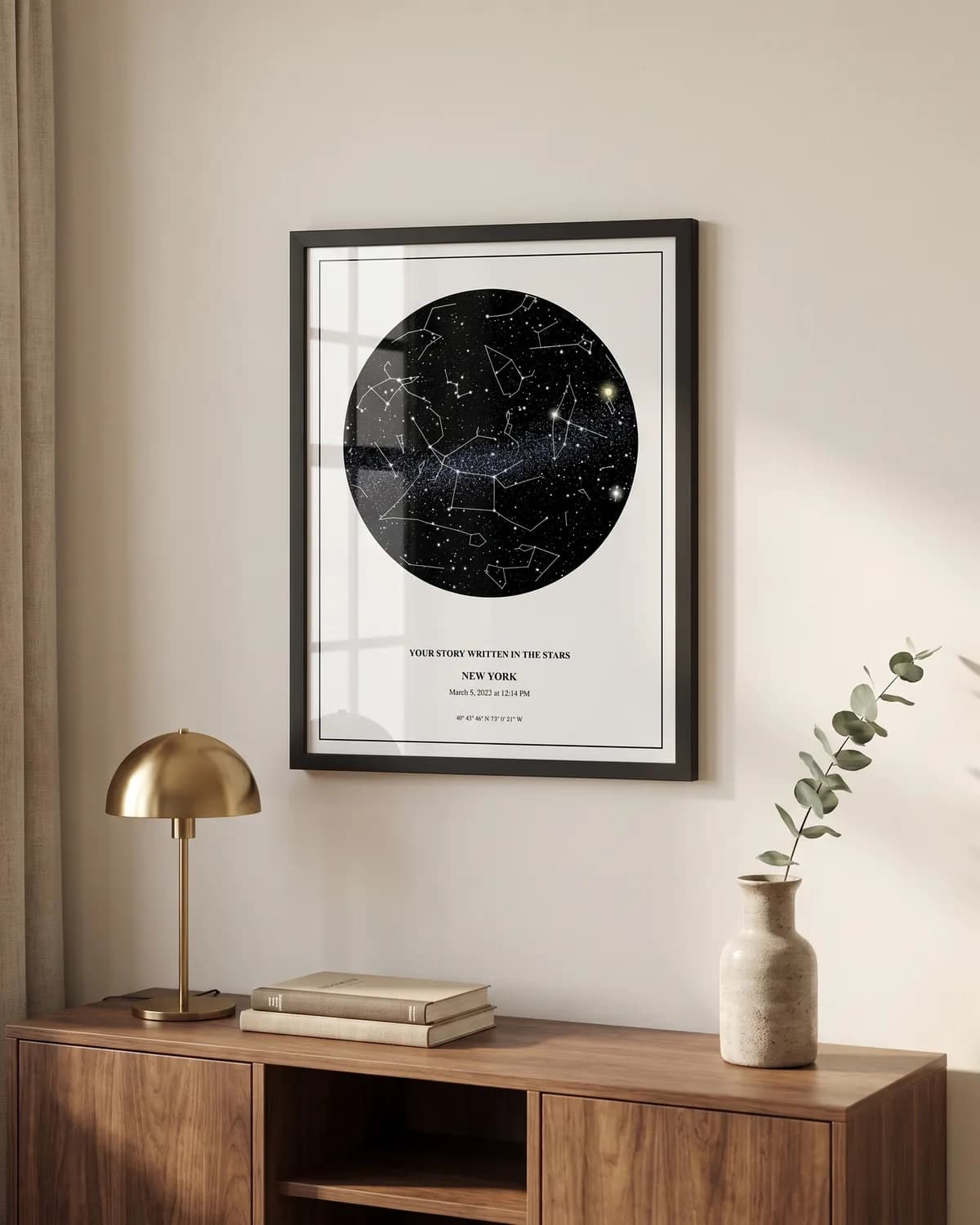
PLATE 03·BLACK · WHITE · OAK FRAME · READY TO HANG
Framed Poster
Solid frame, glazed, hanging hardware fitted. Free shipping.
$79.99$99.99Save 20%
PLATE 04·8 IN ROUND · SILENT SWEEP MOVEMENT
Wall Clock
Their sky, keeping time on the wall. Free shipping.
$74.99$93.74Save 20%
Questions
Naming a star: questions
- Is naming a star real?
- Not in any official sense. The International Astronomical Union (IAU) is the body whose star names astronomers use, and it states that names sold by commercial companies have no formal or official validity. No observatory, star catalogue or astronomy app will use a purchased name. What you get from a registry is a certificate and an entry in that company’s own records.
- Can you buy a star?
- No. Nobody owns stars, so nobody can sell one. Companies that offer to "name" or "register" a star are selling a certificate, not the star and not an official name. The IAU says it dissociates itself entirely from the practice, and the US Library of Congress says it has no connection with any star registry.
- Is a star registry a scam?
- What you receive is usually real: a printed certificate, and often coordinates of a real star. What it is not is official. The name will not appear in any scientific catalogue, and another company can sell a different name for the same star. If a sentimental certificate is what you want and you know that going in, that is your call. If you want something an astronomer would recognise, choose a star that already has a name.
- How do stars actually get names?
- Most stars have catalogue numbers rather than names: the Hipparcos catalogue alone lists 118,218 stars by number. Proper names such as Vega or Arcturus are approved by the IAU’s Working Group on Star Names, which began its official catalogue in 2016 with 227 names and has added more since. The only times the public has helped name stars were the IAU’s NameExoWorlds contests in 2015, 2019 and 2022, which named stars that host planets.
- Can I name a star after someone who died?
- Not officially, and we will not pretend otherwise. What you can give is something real to look at: the named star whose light left the year they were born, with its catalogue number and where to find it, or the actual sky over a place on a date that mattered, such as the night they were born or the night you met.
- Can I name a star after a baby?
- Not officially. For a newborn, the honest gift is the sky over their birthplace on the night they were born, which you can see free in the tool on this page and keep as a print. Their birthday star in the light-year sense starts with Rigil Kentaurus, about 4 light-years away, so it becomes theirs around their 4th birthday and changes as they grow.
- Do you name or register the star?
- No. We do not name, rename, register or dedicate stars, and nothing we sell says we do. The star keeps its official IAU name. We tell you which real star belongs to someone’s story, why, and where to find it in the sky.
- Can I actually see the star?
- Yes. Every one of the 83 stars the finder uses is a named star brighter than magnitude 5, which means it is visible to the naked eye from a dark place. The finder shows where it sits and when it is best seen, and the certificate names its constellation.
- Can two people have the same star?
- Yes, and we say so. A birthday star depends on how old someone is, so everyone born in the same year or two shares a star, the way people share a birthday. Nothing about it is exclusive, which is also true of every registry star, whatever the certificate implies.
- What is in the Birthday Star Certificate?
- One printable page, sent as a PDF by email ($7.99): the person’s birthday star with its IAU name, Hipparcos catalogue number, constellation and distance, the year its light set out, and the real sky over their birthplace on the night they were born with the Moon phase. It does not claim to name the star.
Sources: International Astronomical Union, Buying Stars and Star Names; Library of Congress, Does the Library of Congress maintain a star name registry?; IAU NameExoWorlds. Star distances and brightness: Hipparcos catalogue. Written by Mayukh Bagchi, astronomy PhD candidate developing balloon-borne VLBI telescopes for black hole research.
A real star, honestly given
Find their star, then keep the night
Certificate $7.99. Digital from $19.99. Free Shipping on every print.